A New Kind of Accessibility in Games
- Let the Spiders Be Optional
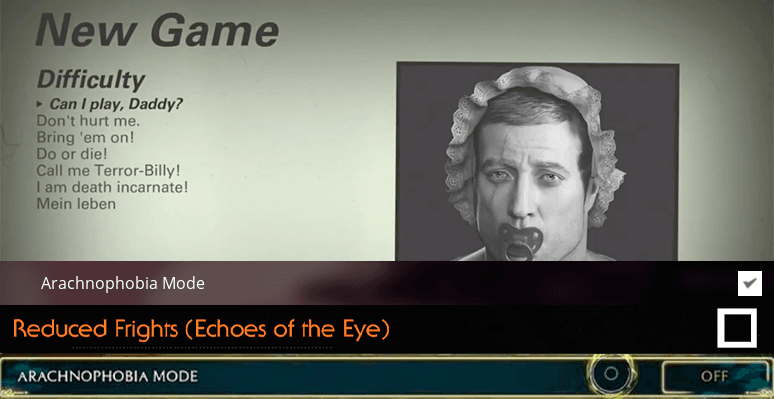
Accessibility only becomes more and more of a priority across all of software development. Colorblind themes, high contrast and screen reader compatibility are integrated as a core part of many applications, rather than as a sour afterthought. This is a great thing. It is great that many more people get to use software in a way that is convenient for them.
When it comes to video games, there have also been strides to improve the accessibility of them. But games pose an interesting challenge when it comes to accessibility. Games are not utility apps. They are consumed primarily for entertainment.
Some games (i.e. Elden Ring and the Dark Souls series) are made with difficulty as a central game design pillar. In a sense, a core part of their game design is the inaccessible nature of them. Making them more accessible would detract from the experience of playing those games. You could make a similar case for horror games, where a central mechanic in them is scaring people. These games are not accessible to people, who dislike scares.
This is not the case for all games, however. Some games have horror elements, that are not central mechanics. Some games have difficult optional side content or a difficulty option.
I'm not trying to say that every game should let you have an "easy mode", or all horror games should have options to turn off all jumpscares. What I am trying to argue for is with this blog post this: If your game has elements that may not be accessible to all players, and these elements are not central to the game, consider making them optional.
If you are not convinced, allow me to go off on a tangent here on why I decided to write this blog post.
The Crawling Case of Satisfactory
During the lockdown of 2020, while some were busy making questionable covers of John Lennon's Imagine, I was busy doing something completely different. I had been hooked on building factories, managing production flows and exploring an alien planet. As you might have guessed, I did all of this in a game. In a game called Satisfactory.
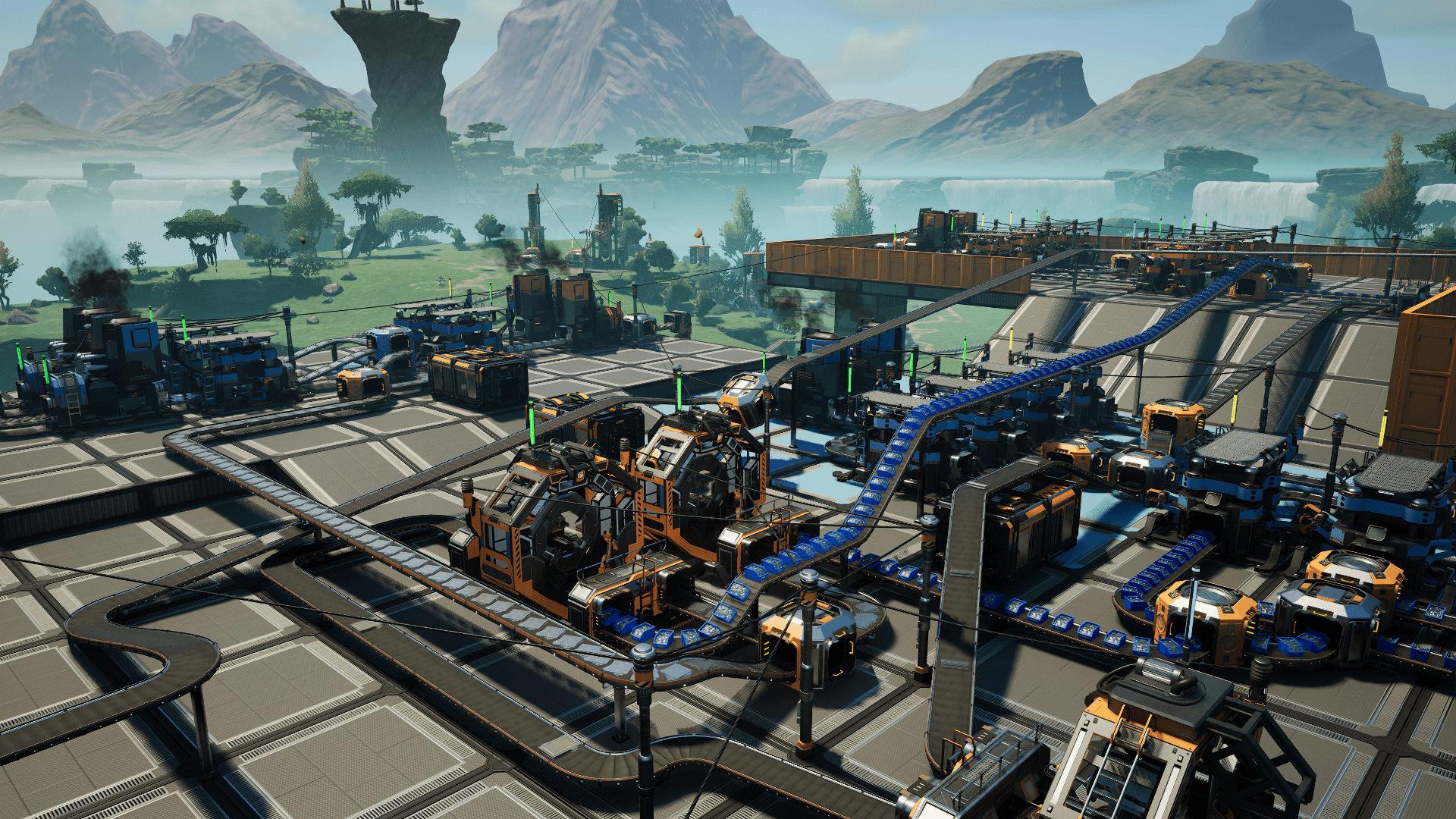
There is something so satisfying and peaceful about this kind of game - an itch no other genre has really ever scratched ("number go up, good"). Still, these games can very time consuming, and as time went on and the world opened up, so faded my interest of my factory on the alien planet.
The "Kitty" Problem
During the Holidays of 2023, the game somehow crawled back into my mind. And crawled it did... I opened it up to discover it had received quite a lot of updates since I last played it. It was amazing. Many quality-of-life changes had been made, and a bunch of new content had been added to the game, completely free of charge.
But as we probably know, nothing in life is truly free, and the price to pay became clear, when I opened the options menu. In front of me were two words, that I very much did not expect to see, and seeing them made a shiver run down my spine: "Arachnophobia Mode".
This confirmed two things. For one, spiders had been added to the game. And two, the spiders were scary enough that the developers had thought to add a mode that made them less so. I. Hate. Spiders.
"But fine", I thought, "I will just turn on the arachnophobia mode, and we will see how bad it is." I booted up a new world, and instantly remembered, why I fell in love with the game the first time. I gathered some iron and copper, started automating production and built a space elevator! Everything was going great, and there were no spiders in sight. For a moment, I had the thought that the arachnophobia mode might turn the spiders off altogether. How naive of me, that was...
One evening, spelunking about in some nearby cave system, I came across an odd sound. It was unmistakable. It was... a meow? Not just one, but about a dozen of meows all overlapping each other. I had a hard time finding the source, so I decided to do a quick Google search. It turns out that the arachnophobia mode turns every spider in the game into a flat image of a cute kitten, and switches their sounds to meows. You, dear reader, might think this is quite funny. In fact, I found it quite funny, knowing all the spider shenanigans were turned into kitty shenanigans.
However, coming face-to-face with these kitties, I found it hard to shake that they were meant to be spiders, that what they were representing was not just a cute cat jpeg, but in fact spiders. They still jump around like the spiders would, and I would get genuine goosebumps while fighting them - not in good way.
You are likely thinking I am overreacting. You are thinking, I should just get over myself and play the game with the kitties. And I agree. I would have loved to, but I genuinely could not bring myself to play the game. Remember, I was hooked on this game during lockdown. And I was so ready to get hooked on that sweet, sweet "number go up"-goodness. So believe me when I say that I really wanted to play it.
There was nothing to do about it. I had to move on to other things. Deep down, I always wondered what could have been.
A surprise, to be sure, but a welcome one
About a year later, I scrolled through TikTok and saw a video talking about how Satisfactory just added a feature to completely turn off spiders (including the kitty pictures).
Immediately, I booted up Satisfactory, and there was in fact an option to disable arachnids. I let out a big sigh of relief and readied myself to get bit by the Satisfactory-bug once again - this time with less than 8 legs.
I find it interesting, how a change that actually removes content from the game added so much value for me. How a feature that likely didn't require a lot of effort from the developer, made the game go from unplayable for me to a favorite of mine.
In conclusion
As accessibility only becomes more of a priority, game developers should really consider all kinds of accessibity, and make non-core gameplay elements optional without compromising on the experience you wish to create.